
Databases Showcase
The most used types of databases in the world!
Currently displayed databases ↘︎



SQL Databases: The Backbone of Data Management.
SQL databases, standing for Structured Query Language databases, are the cornerstone of modern data management and storage. Renowned for their robust structure, they organize data into well-defined tables, columns, and rows, enabling efficient storage, retrieval, and manipulation of data. This relational model ensures data integrity and consistency, making SQL databases an ideal choice for applications requiring precise and complex data operations.

MySQL: A Popular Open-Source Database
MongoDB
NoSQL Databases
Scaling Beyond Traditional Boundaries
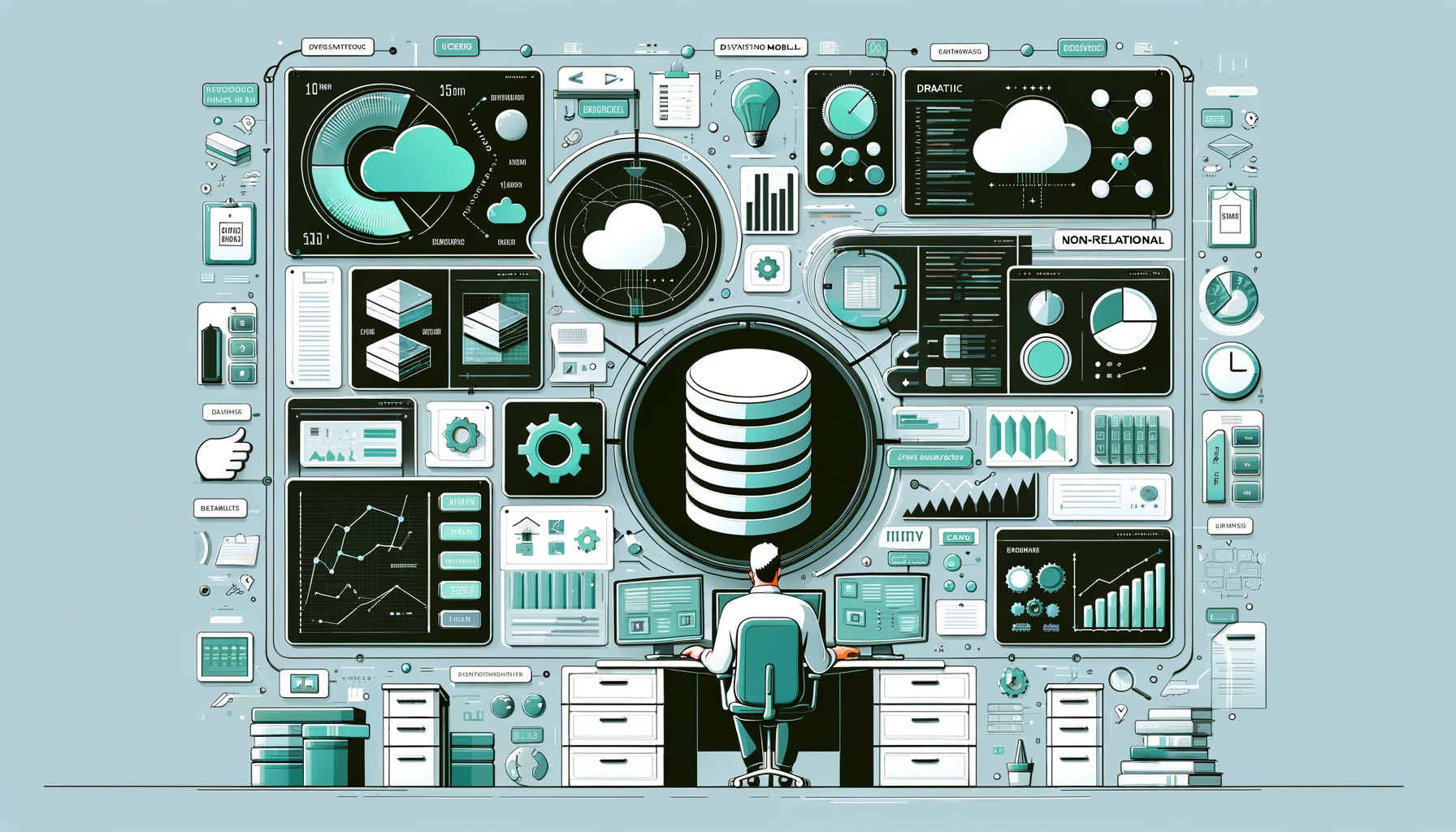
NoSQL databases represent a shift from traditional relational database structures, offering flexibility, scalability, and high performance for modern applications. Designed to handle a vast array of data types, from structured to semi-structured and unstructured data, NoSQL databases excel in environments where data requirements are continuously evolving.
Schema-less Design:
NoSQL databases allow for dynamic data models, making them ideal
for rapidly changing data formats.
Scalability:
Excelling in horizontal scaling, they offer solutions for handling
massive volumes of data across distributed systems.
Variety of Data Models:
Catering to specific needs, NoSQL encompasses document, key-value,
graph, and column-family databases.
High-Performance: Optimized for quick data retrieval and handling large-scale
data operations, making them a go-to choice for big data and
real-time web applications.

MongoDB
The Dynamic Choice in NoSQL Databases
© 2026 Aurel1co$

